Dochitect
Menu
  • Home
  • Dochitect Bio
  • The Physician-Architect Model
  • Articles & Publications
  • Presentations
  • In the News
  • Contact

Evidence-Based Design

Design Museum Boston – The Architecture of Health

January 25, 2019 / Dochitect / Evidence-Based Design, The Physician-Architect Model

Presentations

Event: Design Museum Boston
Title: The Architecture of Health
Date: January 25, 2019

Design Museum Mornings with Diana Anderson, MD, M.Arch, healthcare architect, and a board-certified internist.

Can architecture impact health? Increasingly, clinicians are asking not only for the architect’s perspective, but to develop a skill-set and knowledge-base that will allow them to help shape the future of health. Architects aim to engage clinical professionals in research, education, and practice. For some patients, design can succeed where drugs may fail. For clinicians, the built environment can support and improve efficient care delivery. We all have a shared goal in seeking to enhance health outcomes through innovations in the design of healthcare spaces.

Dochitect speaks at the Design Museum Boston Morning event about The Architecture of Health!

Keynote Presentations, Lectures

The convergence of architectural design and health – The Lancet

December 7, 2018 / Dochitect / Design for Clinical Staff, Evidence-Based Design, The Physician-Architect Model

Peer-reviewed publication

Publication: The Lancet
Publication Reference: December 7, 2018
Authors: Diana C Anderson, Steph A Pang, Desmond O’Neill, Eve A Edelstein

View Article

The Lancet features Architectural Design and Health!

“During my medical residency, I realized how much burnout affected us as trainees on the front lines of care. In particular, I noticed that much of that difficulty was tied to the areas in which we worked—constant noise, poor lighting, and lack of daylight. Space design made patient care challenging at times, too; for example, not being able to access the correct side of my patient to perform the physical exam as I had been taught. I often considered that the built environment could improve care delivery with more collaboration amongst designers and clinicians.”— Diana Anderson


The disciplines of public and environmental health have long recognised the impact of the built environment on health. Yet clinicians have limited opportunity to engage with architects and design professionals, and the impact of health-care design is largely absent from health policy discussions. However, this is beginning to change.

Read more HERE!


Peer-Reviewed Publications

Bricks and Morals—Hospital Buildings, Do No Harm

October 25, 2018 / Dochitect / Evidence-Based Design, Health Design & Ethics, The Physician-Architect Model

Peer-reviewed publication

Publication: Journal of General Internal Medicine
Publication Reference: 2018 Oct 25 [Epub ahead of print]; In print 2019;34(2),312-316
Author: Diana C. Anderson

Abstract

The volume and rigor of evidence-based design have increasingly grown over the last three decades since the field’s inception, supporting research-based designs to improve patient outcomes. This movement of using evidence from engineering and the hard sciences is not necessarily new, but design-based health research launched with the demonstration that post-operative patients with window views towards nature versus a brick wall yielded shorter lengths of hospital stay and less analgesia use, promoting subsequent investigations and guideline development. Architects continue to base healthcare design decisions on credible research, with a recent shift in physician involvement in the design process by introducing clinicians to design-thinking methodologies. In parallel, architects are becoming familiar with research-based practice, allowing for further rigor and clinical partnership. This cross-pollination of fields could benefit from further discussion surrounding the ethics of hospital architecture as applied to current building codes and guidelines. Historical precedents where the building was used as a form of treatment can inform future concepts of ethical design practice when applied to current population health challenges, such as design for dementia care. While architecture itself does not necessarily provide a cure, good design can act as a preventative tool and enhance overall quality of care.

Read more here!

Peer-Reviewed Publications

IHCD: Architectural Form + Clinical Function: A Design Paradigm Follows

October 9, 2018 / Dochitect / Evidence-Based Design, The Physician-Architect Model

Presentations

Event: Institute for Human Centered Design, Boston
Title: Architectural Form + Clinical Function: A Design Paradigm Follows
Date: October 9, 2018

Dochitect is invited to speak at the Institute for Human Centered Design (IHCD) in Boston as part of their HUBweek 2018 open door event!

“A thought-provoking talk. I also loved your sketches.”

“Diana was amazing! So articulate and thoughtful, we are excited to see what you do next!”

“‘Design matters & design can prevent disease’ – Dr. Diana Anderson @dochitect – on #ethics in architecture & design for healthcare – speaking at @IHCDesign for #HUBweek #architecture #designmatters”

Lecture overview: The delivery and design of healthcare today is rapidly changing, and increasingly complex. How are we closing the gap between designer intent and user experience? Increasingly, clinicians are asking not only for the architect’s perspective, but to develop a skill-set and knowledge-base that will allow them to help shape the future of health. Architects aim to engage clinical professionals within research, education and practice. We all have a shared goal in seeking to enhance health outcomes through innovations in the design of healthcare spaces, technologies, care delivery systems and policies. Specialized experts who can offer unique perspectives and hybrid models in problem-solving of complex systems are increasingly seen. Through combined thinking, research-based design has expanded to understand and improve the experience within healthcare spaces.

For some patients, design can succeed where drugs may fail. For clinicians, the built environment can support and improve efficient care delivery. Current trends, ideas and next steps for design to enrich our healthcare interface are presented, including an overview of:

(1) the infrequent historical intersection and recent convergence of medicine and design;
(2) the impact of architecture on health for preventative care;
(3) the future of health with an emphasis on multidisciplinary collaborative space, technology, and health spaces within our homes.

Conference Presentations, Lectures

HUBWEEK 2018 Change Maker: How Architecture Impacts our Health

October 8, 2018 / Dochitect / Evidence-Based Design, The Physician-Architect Model

Presentations

Event: HUBweek 2018 Change Maker Conference, Boston
Title: How Architecture Impacts our Health
Date: October 8, 2018

Dochitect speaks at HUBweek 2018 in Boston as part of the Change Maker Conference event!

How Architecture Impacts our Health: Design Thinking for Medicine

The delivery and design of healthcare today is rapidly changing, and increasingly complex. How are we closing the gap between design intent and user experience? Through combined thinking, research-based design has expanded to understand and improve the experience within healthcare spaces. For some patients, design can succeed where drugs may fail. For clinicians, the built environment can support and improve efficient care delivery. Healthcare innovation can occur where architecture and medicine meet.


Conference Presentations

Clinicians for Design: A Convergence of Expertise to Enhance Cognition and Healthcare Design

September 20, 2018 / Dochitect / Design for Clinical Staff, Evidence-Based Design, The Physician-Architect Model

Presentations

Event: The Academy of Neuroscience for Architecture (ANFA) – Congress, Salk Institute, CA
Title: Clinicians for Design: A Convergence of Expertise to Enhance Cognition and Healthcare Design How Architecture Impacts our Health
Format: Poster presentation
Authors: Eve Edelstein, Diana Anderson, Thomas Grey, Desmond O’Neill
Date: September 20-22, 2018

Dochitect participates in a Poster Presentation at The Academy of Neuroscience for Architecture 2018!

Click here to see the full 2018 ANFA Conference abstract proceedings from the “Shared Behavioral Outcomes” event

ABSTRACT:
Background:
Increasingly, clinicians are asking not only for the architect’s perspective, but to develop a design skill-set and knowledge base that will allow them to help shape the future of hospitals, medicine, and healthcare.

Purpose/Objectives:
Clinicians for Design is an international network of clinicians and researchers with a vision to inspire and accelerate the design of environments that enhance health outcomes through innovations in healthcare spaces, technologies, care delivery systems and policies (1). The inaugural Clinicians for Design workshop was hosted at the Royal College of Physicians, during the European Healthcare Design conference, London, UK in June, 2017. Thereafter, workshops and research activities with hospitals and academic medical centers are exploring key lessons learned from the clinicians, healthcare system leaders, and medical researchers. Specific objectives include the application of research to improve practice, meetings to increase clinician understanding of the architectural process, and integration of clinical expertise with design-thinking.

Methods/Results:

As ‘neuro-architectural’ research converges with clinically-informed design, it has inspired the emergence of new models of practice for dementia care. A network of like-minded clinicians, neuroscientists, and a team of geriatricians and designers have formed an alliance to enable a deeper understanding of the elements which contribute to dementia-inclusive design in healthcare facilities. A leading cause of institutionalization for those with dementia is often spatial disorientation (2). Absence of cognitive mapping in dementia can be partially compensated for by using other forms of orientation strategies (3). Therefore, the design of healthcare facilities can significantly influence one’s spatial orientation and wayfinding abilities (4). This grant funded study aims to develop a ‘Design Audit Tool’ in line with Dementia-Inclusive Design Guidelines, ensuring equality across healthcare users (5). The goal is for inclusive, accessible, and easily understood environmental design for people with dementia, based on neurological and architectural research.

Implications:
Clinicians and designers discuss their progress in identifying dementia care pathways and research outcomes using a transdisciplinary approach. The advances towards a dementia inclusive healthcare audit tool is described, including the role of experts and emerging professionals in medicine, research, and design who seek an enduring connection between clinical practice and architecture.

REFERENCES:
(1) Anderson DC, Pang SA, Edelstein EA, O’Neill D. The Convergence of Architectural Design and Health: Clinicians for Design. The Lancet. 2018. Unpublished [Submitted, under review].
(2) Monacelli AM, Cushman LA, Kavcic V, Duffy CJ. Spatial disorientation in Alzheimer‘s disease: The remembrance of things passed. Neurology. 2003 Dec 9;61(11):1491-7.
(3) Poettrich K, Weiss PH, Werner A, Lux S, Donix M, Gerber J, von Kummer R, Fink GR, Holthoff VA. Altered neural network supporting declarative long-term memory in mild cognitive impairment. Neurobiol Aging. 2009 Feb;30(2):284-98. Epub 2007 Jul 17.
(4) Marquardt G. Wayfinding for people with dementia: a review of the role of architectural design. HERD. 2011 Winter;4(2):75-90.
(5) De Suin A, O’Shea E, Timmons S, McArdle D, Gibbons P, O’Neill D, Kenneally SP, Gallagher P. Irish National Audit of Dementia Care in Acute Hospitals. Cork: National Audit of Dementia Care. 2014.

Conference Presentations

Extreme Makeover: Hospital Edition. Physician & Architect, Dr. Diana Anderson

September 18, 2018 / Dochitect / Design for Clinical Staff, Evidence-Based Design

Presentations

Podcast: PeersSpectrum Podcast
Title: Extreme Makeover: Hospital Edition. Physician & Architect, Dr. Diana Anderson
Date: September 18, 2018

Dochitect is featured by PeerSpectrum Podcast!


What is PeerSpectrum? “The practice of modern medicine is rapidly changing, and increasingly complex. Finance, negotiation, communication, technology, personal branding and data analytics are just some of the “non-medical” skills now required of modern physicians. Simply keeping up isn’t enough. Going it alone won’t cut it either. Staying ahead requires the help of specialized experts who can be resources for your practice. This is the podcast to find those experts, both inside and outside of medicine. Turn your downtime into up-time and recharge with incredible stories and unique perspectives from your entire spectrum of peers.”

You can find the podcast on iTunes, and the PeerSpectrum website (along with other platforms like Google Play and Sticher)

Podcasts

Informatics for the Modern Intensive Care Unit

December 5, 2017 / Dochitect / Design for Critical Care, Evidence-Based Design

Peer-reviewed publication

Publication: Critical Care Nursing Quarterly
Publication Reference: 2018 Jan/Mar;41(1):60-67
Authors: Diana C. Anderson, Ashley A. Jackson, Neil A. Halpern

Abstract

Advanced informatics systems can help improve health care delivery and the environment of care for critically ill patients. However, identifying, testing, and deploying advanced informatics systems can be quite challenging. These processes often require involvement from a collaborative group of health care professionals of varied disciplines with knowledge of the complexities related to designing the modern and “smart” intensive care unit (ICU). In this article, we explore the connectivity environment within the ICU, middleware technologies to address a host of patient care initiatives, and the core informatics concepts necessary for both the design and implementation of advanced informatics systems.

Peer-Reviewed Publications

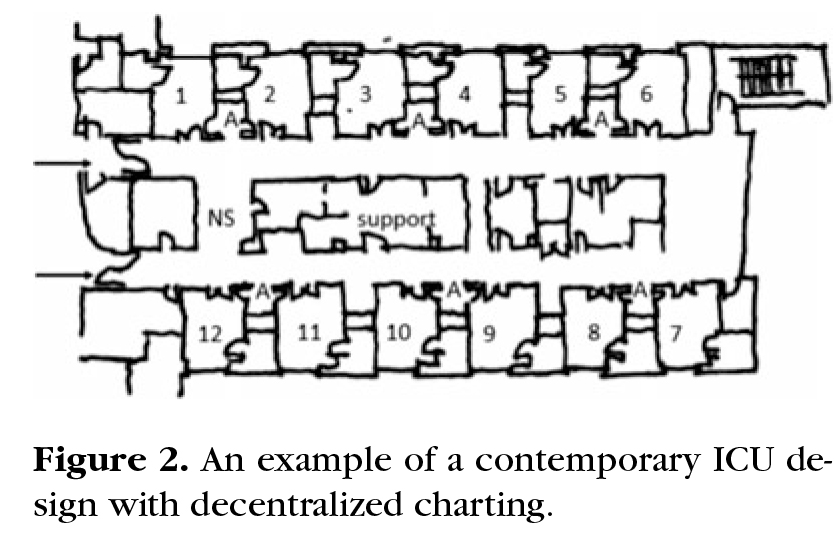
Decentralization: The Corridor Is the Problem, Not the Alcove.

December 5, 2017 / Dochitect / Design for Critical Care, Evidence-Based Design

Peer-reviewed publication

Publication: Critical Care Nursing Quarterly
Publication Reference: 2018 Jan/Mar;41(1):3-9
Authors: D. Kirk Hamilton, Sandy M. Swoboda, Jin-Ting Lee, Diana C. Anderson

Abstract

There is controversy today about whether decentralized intensive care unit (ICU) designs featuring alcoves and multiple sites for charting are effective. There are issues relating to travel distance, visibility of patients, visibility of staff colleagues, and communications among caregivers, along with concerns about safety risk. When these designs became possible and popular, many ICU designs moved away from the high-visibility circular, semicircular, or box-like shapes and began to feature units with more linear shapes and footprints similar to acute bed units. Critical care nurses on the new, linear units have expressed concerns. This theory and opinion article relies upon field observations in unrelated research studies and consulting engagements, along with material from the relevant literature. It leads to a challenging hypothesis that criticism of decentralized charting alcoves may be misplaced, and that the associated problem may stem from corridor design and unit size in contemporary ICU design. The authors conclude that reliable data from research investigations are needed to confirm the anecdotal reports of nurses. If problems are present in current facilities, organizations may wish to consider video monitoring, expanded responsibilities in the current buddy system, and use of greater information sharing during daily team huddles. New designs need to involve nurses and carefully consider these issues.

Peer-Reviewed Publications

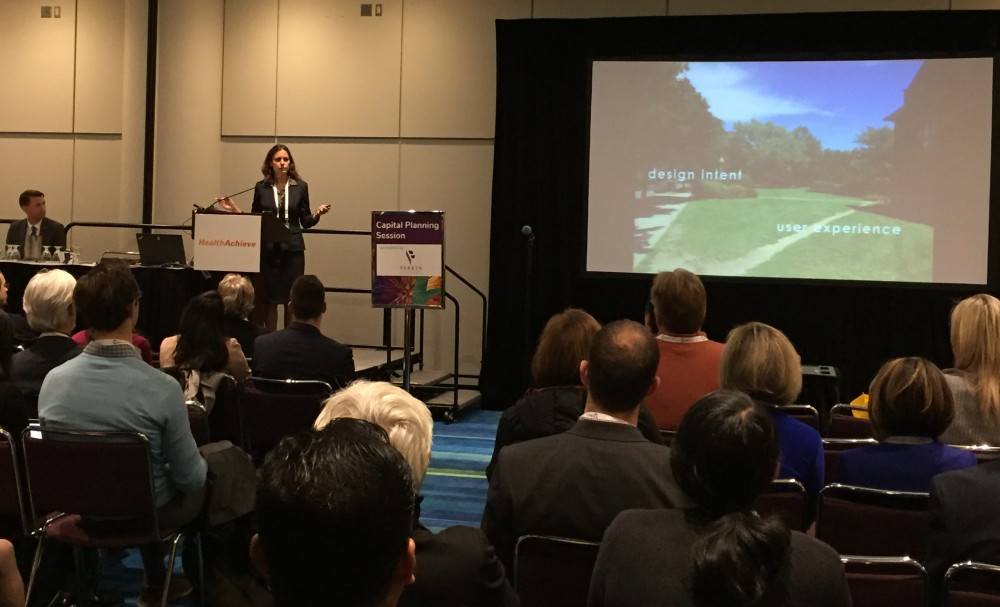
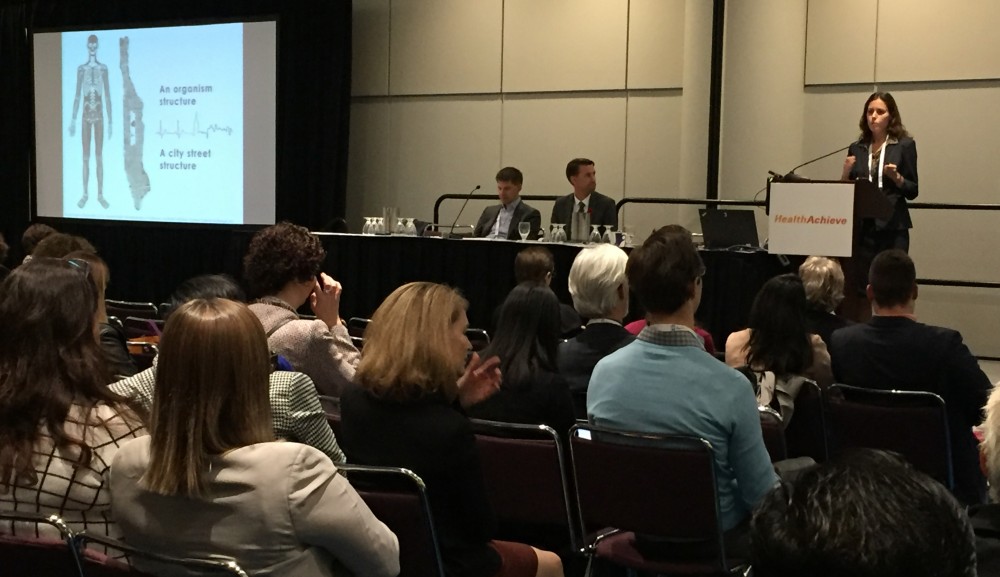
Getting it Right: Designing the Process to Achieve Transformative Outcomes

November 7, 2017 / Dochitect / Evidence-Based Design, The Physician-Architect Model

Presentations

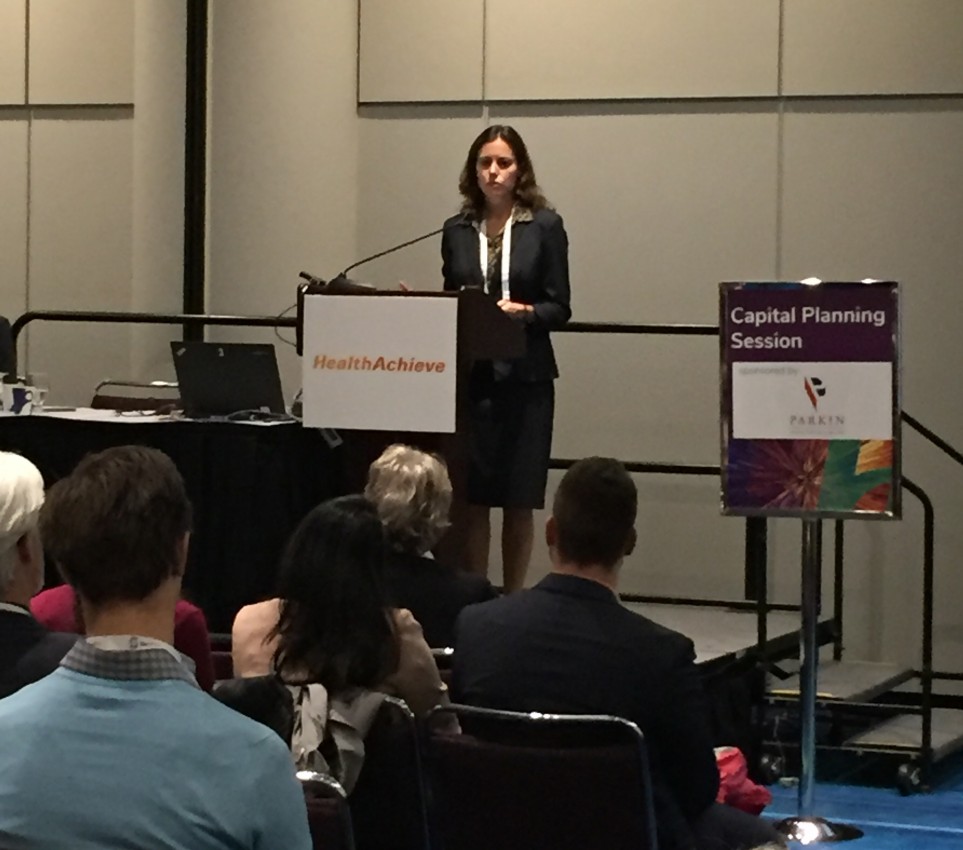
Presentation Title: Getting it Right: Designing the Process to Achieve Transformative Outcomes
Event: HealthAchive, A program by the Ontario Healthcare Association
Presentation Date: Tuesday, November 7, 2017
Event Location: Metro Toronto Convention Center, Toronto, Canada

Dochitect spoke at HealthAchieve in Toronto for the annual Capital Planning session along with Architect Tye Farrow on Process Design to Achieve Transformation Outcomes!

Read more about dochitect’s ideas on the ways clinicians and architects can find a balance between illness, health, and design in this article leading up to the talk entitled ‘Getting it right: merging medicine and architecture‘

Click here to watch this short video for a preview on what Dochitect will be discussing at the conference!

Process Design to Achieve Transformative Outcomes

​Presiding:
Matthew Kenney
Director, Capital Planning and Biomedical Technology
Hamilton Health Sciences

Welcome and Opening Remarks
1:00pm

Getting it Right: Designing the Process to Achieve Transformative Outcomes
1:10pm

Despite a relationship between medicine and architecture since ancient times, the professions of hospital architecture and medical practice have rarely converged, and this convergence is recent. Since the advent of critical care technologies and advanced pharmaceutical treatments, hospital design moved into a machine-like period. Architects became challenged to maintain a sense of humanity and overcome the technical apparatus through design. Increasingly, professionals in health care and design seek shared knowledge and expertise.

An anastomosis represents the connection of two normally divergent structures; in medicine, this can mean blood vessels, or other tubular structures such as loops of intestine. This connection of separate system parts then forms a network, such as a river and its branches. How do clinicians and architects find a balance between illness, health, and design – and work together to inspire the emergence of a new mode of practice? To consider therapeutic design as a possible form of treatment requires participation of both the clinician and the architect – a true anastomosis of fields.

Dr. Diana Anderson
Physician
American Board of Internal Medicine (ABIM)
Architect
American College of Healthcare Architects (ACHA)

Tye Farrow
Senior Partner
Farrow Partnership Architects Inc.

Question and Answer Period
2:15pm

Adjournment / View Exhibits
2:30pm

Conference Presentations
12345

A Book from Dochitect

The Dochitect’s Journal: A collection of writings on the intersection of Medicine and Architecture

Find out more here.

Search

Recent Articles/Publications

  • Bioethics Peer Review: A Structured Evaluation Framework for Long-Term Care Environments

    February 13, 2026
  • Book Review of Sick Architecture, by Beatriz Colomina, Nick Axel, and Guillermo S. Arsuaga. The MIT Press, 2025

    November 21, 2025
  • Society of Critical Care Medicine 2024 Guideline on Adult ICU Design

    February 21, 2025

Recent Presentations

  • Keynote Speaker, Women in Science and Engineering (WISE) 14th Annual Conference, University of Toronto

    January 17, 2026
  • RAIC Panel Discussion- Redefining Long-Term Care: Architecture, Culture, and Person-Centered Approaches

    September 3, 2025
  • Canadian Institute: Healthcare Infrastructure for Aging Populations, Atlantic Canada

    July 16, 2025

Publication Type

  • Blog Post
  • Book
  • Book Chapter
  • Book Review
  • Commentaries
  • Letters to the Editor
  • Peer-Reviewed Design Guidelines
  • Peer-Reviewed Publications

Presentation Type

  • Conference Presentations
  • Keynote Presentations
  • Lectures
  • Panel Discussions
  • Podcasts
  • Webinars

Design Topics

  • Commentaries & Event Reviews
  • Design for Clinical Staff
  • Design for Critical Care
  • Design for Geriatrics
  • Design for Infection Control
  • Design for Palliative Care
  • Design for Patient Safety
  • Design for Resiliency
  • Design for the Future of Health
  • Dochitect in the News
  • Evidence-Based Design
  • General
  • Health Design & Ethics
  • The Physician-Architect Model

Archives

Follow Dochitect

Follow me on:

** ©2026 Dochitect :: Site by KPFdigital :: Admin Login