
Peer-Reviewed Publication
Publication: American Journal of Medical Quality
Publication Date: Am J Med Qual. 2015 Apr 8. pii: 1062860615581199.
Authors: Diana C. Anderson, MD, MArch, Thomas S. Postler, PHD, Thuy-Tien Dam, MD
Abstract
 Patient falls are the most common type of in-hospital accidents. The objective of this retrospective descriptive study was to describe the locations and characteristics of hospital-related falls. Data on patient characteristics, including locations and fall circumstances, were collected through incident reports and medical records. A total of 1822 falls were documented at a 921-bed, urban academic hospital center over a one-year period; 1767 (97.0%) of the falls occurred in the hospital setting, 55 (3.0%) in ambulatory care. The majority of falls (80.8%) occurred within inpatient units; the remainder within the greater hospital campus. In all, 73.4% of fallers had fall prevention protocols implemented prior to the fall. The youngest age group (≤49 years) had the highest percentage of fallers. This study provides novel insights into variables found to be associated with falling, including location of falls within the hospital campus, efficacy of fall prevention protocols, and age groups.
Additional Press:
Note This research was presented at Medicine Grand Rounds, Department of Internal Medicine Resident Research Day, Columbia University Medical Center, March 26, 2014:


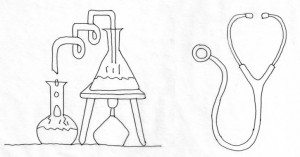 It has been documented that 80% of scientific breakthroughs occur outside the laboratory environment in social settings. Take an inside look at the research and clinical environments through the eyes of a scientist and a physician working on the same academic healthcare campus and understand the interface between the two, a true bench to bedside approach. Discuss the unique features of collaboration in the research setting and subsequent application to clinical treatment. The types of interactions that occur in the research and clinical environments will be shared , and subsequently translated into a discussion of the built environment’s impact on collaboration.


 Imagine the lessons learned if the architect could know what the doctor knows. This unique discussion provides an inside look at the hospital environment through the eyes of a “Dochitect”—a hybrid professional in medicine and architecture. Hear the story of health design from an architect pursuing internal medicine residency training and uncover new perspectives as you go with her on core rotations. Case studies highlighting the importance of space design will be shared with design anecdotes and functional analysis of hospital departments emphasizing the practical importance of design qualities that impact the work environment for staff and healing environment for patients and families.
 Rounding is critical to developing integrated care plans, and there is a trend for moving daily rounds from the bedside to conference rooms. This study’s aim was to document staff preferences for the location of rounding practices, and to determine the effect of available space on those preferences.