Dochitect
Menu
  • Home
  • Dochitect Bio
  • The Physician-Architect Model
  • Articles & Publications
  • Presentations
  • In the News
  • Contact

Publication type: "Conference Presentations"

Disruptive Innovation: Is it time to re-think our healthcare design strategies?

November 14, 2016 / Dochitect / Design for Clinical Staff, Design for Geriatrics

Presentations

Presentation Title: Disruptive Innovation: Is it time to re-think our healthcare design strategies?
Event: Healthcare Design Expo & Conference 2016
Presentation Date: November 14, 2016
Event Location: Houston, Texas

Dr. Anderson co-leads a round table session with Dr. George Taffet, MD, FACP, Chief, Geriatrics, Baylor College of Medicine, Houston Methodist Hospital, to discuss the impact of space design on geriatric patients and clinical staff.

speakingSession Description:

Healthcare design’s recent revolution towards improved patient experience and care delivery has remained similar for several decades. Hospital activist Dr. Leland Kaiser stated that “The hospital is a human invention and as such can be reinvented any time.” Given that there is no therapeutic value to strict bed rest, which can in fact be detrimental and lead to deconditioning- most notably in the elderly population, should the patient bed continue to be the focal point around which we design the room?  Hospital corridors are already dynamic spaces of patient physical therapy, multidisciplinary team rounding, family discussions and infection control practices. Can a hospital corridor become more than a long narrow space with equipment spilling over and laundry bins scattered throughout? The notion of separating patient and staff circulation has become best practice in healthcare design over recent years. With healthcare moving in the direction of the patient becoming the advocate of their own healthcare and clinicians providing the expertise to aid patients in their decision-making, should the physical design separate what the clinical model is trying to unify? It may be time to disrupt our current design thinking and reinvent some best practice design trends.

img_0118 Learning Objectives:

  • To challenge current healthcare design thinking through the integration of medical knowledge and upcoming clinical trends.
  • Outline new ways of thinking about the space needs of clinicians by considering staff utilization of space given changing medical practices, including areas for information transfer and multidisciplinary rounding practices.
  • Understand the geriatric patient needs and how to accommodate complex chronic illness models within the built environment.
  • Review circulation and flow patterns of clinicians, patients and visitors in order to discuss the on-stage/off-stage model of wayfinding within an acute care space versus the ambulatory care model.

Session Panels:

12 43 5 Conference Presentations

Intensive Care Unit Design – 25 Years of Winning Trends

June 27, 2016 / Dochitect / Design for Critical Care

Presentations

Presentation Title: Intensive Care Unit Design – 25 years of winning trends
Event: European Healthcare Design Congress
Presentation Date: June 27, 2016
Event Location: Royal College of Physicians, London, UK

Session Description:
The goal of intensive care is to provide the highest-quality treatment in order to achieve the best outcome for critically ill patients. Research supporting the impact of the built environment has exerted a strong influence on multidisciplinary design teams as they seek solutions to maximize operational efficiency and create supportive healing environments for patients, families, and clinical staff.

The ICU is an ever-changing and rapidly advancing environment, with the integration of advanced informatics adding a new layer of complexity to design planning and operations. Future ICU designs will require planning for long-term flexibility by incorporating design decisions that accommodate changing care practices and information technology.

ehd-critical-care-image

Dochitect speaks at European Healthcare Design 2016 about critical care design and provides an overview of winning design trends over the last 25 years. Click here to view a video of the presentation.

Dochitect also judges the European Healthcare Design Awards for Healthcare Design Projects over 25,000M2. Click here to learn more about the awards ceremony and winning designs.

Conference Presentations

Finding Respite in the Moment: Designing for Clinical Staff

October 13, 2015 / Dochitect / Design for Clinical Staff

Presentations

Presentation Title: Finding Respite in the Moment: Designing for Clinical Staff
Event: 31st Annual Agency for Health Care Administration (AHCA) Seminar
Presentation Date: Tuesday, October 13, 2015
Event Location: Orlando, FL

Dr. Anderson speaks at one of the AHCA main speaker sessions where the theme was a focus on creating therapeutic healing environments that are inspirational to promote healing.

Session Description:

Diana CroppedHealthcare design has evolved around patient-centered care and health outcomes related to the built environment. However, clinicians face increasing workload demands and a shift in this design model is needed in order to understand the impact of space on staff efficiency, job satisfaction and multidisciplinary teamwork. Healthcare staff members utilize these areas for countless consecutive hours, working both day and night shifts. Dr. Anderson’s presentation will explain the necessity of providing staff respite areas inside the domains of the health care facility. These areas should be connected to the exterior environment to provide regenerative spaces to regain the perspective necessary for adequate care giving.

Learning Objectives:

  • Understand the medical staff experience, including design and layout requirements to accommodate movement patterns and space needs.
  • Explore the spaces needed for staff emotional support during intense periods of training, for those who serve on the front lines of patient care.
  • Gain an understanding of successful environmental components promoting staff efficiency and multidisciplinary care.
  • Describe the work hour restrictions currently underway within medical training programs across North America, changing the way physicians practice and gain an understanding of how this change affects space and design requirements.

sketch6


The sketch demonstrates the change towards a shift-work model for physicians, where work periods are regulated and hand-offs of patient information take place more frequently.


Conference Presentations

From Bench to Bedside: Exploring the Impact of Space Design on Multidisciplinary Collaboration

November 16, 2014 / Dochitect / Design for Clinical Staff

Presentations

Presentation Title: From Bench to Bedside: Exploring the Impact of Space Design on Multidisciplinary Collaboration
Event: Healthcare Design Expo & Conference 2014
Presentation Date: November 16, 2014
Event Location: San Diego, CA

Dr. Anderson co-leads a round table session discussing the impact of space design on multidisciplinary collaboration between scientists and clinicians.

Session Description:

Diana Anderson, M.D., MRAIC, LEED AP, Resident Physician, Department of Medicine, New York-Presbyterian Hospital – Columbia University Medical Center; Thomas Postler, Ph.D., Post-doctoral Research Scientist, Department of Microbiology and Immunology, Columbia University Medical Center.

Lab hospital 1It has been documented that 80% of scientific breakthroughs occur outside the laboratory environment in social settings. Take an inside look at the research and clinical environments through the eyes of a scientist and a physician working on the same academic healthcare campus and understand the interface between the two, a true bench to bedside approach. Discuss the unique features of collaboration in the research setting and subsequent application to clinical treatment. The types of interactions that occur in the research and clinical environments will be shared , and subsequently translated into a discussion of the built environment’s impact on collaboration.

Learning Objectives:

  • Understand the impact of an interdisciplinary research approach, which is then applied to patient care. Learn how space can accommodate the independent needs of the scientist, while maintaining a balance of social interaction and discussion.
  • Recognize how this research is then taken from the bench and applied at the bedside by a clinician and how physicians use interactive spaces with the multidisciplinary team for patient care.
  • Explore ways in which the physical environment can foster this model of teamwork and enhance communication between the two environments to promote application of research. Identify barriers to effective collaboration within both the laboratory and the clinical settings.
  • Describe the types of interactions that occur in the laboratory and hospital environments in order to explore design solutions for creating interdisciplinary discussion forums within both the research and clinical settings.
Lab hospital 2


Conference Presentations

Drafting Meets Doctoring: An Architect’s View of Health Design as Resident Physician

September 24, 2014 / Dochitect / The Physician-Architect Model

Book Chapter

Book Title: get better! the pursuit of better health and better healthcare design at lower costs per capita. Proceedings of the 33rd UIA/PHG International Seminar. Toronto, Canada. September 24-28, 2013
Publisher: University of Florence: TESIS Inter-University Research Center, 2014
Editor: Romano Del Nord

Chapter Title: Drafting Meets Doctoring, An Architect’s View of Health Design as Resident Physician
Chapter Author: Diana C. Anderson, MD, M.Arch.
View chapter

TESIS_cover-2013

The architect Louis Kahn said that “once challenged, the architect will find completely new shapes and means to produce the hospital, but he cannot know what the doctor knows.” Imagine the lessons learned if the architect could know what the doctor knows. Take an inside look at the hospital environment through the eyes of a dochitect, a hybrid professional in medicine and architecture.

See health design from the perspective of an architect pursuing internal medicine residency training at a large New York City teaching hospital. A design journal was kept throughout the dochitect’s medical internship to record functional annotations for each subspecialty space and their relation to form the urban hospital. Join the dochitect through core rotations including the medical intensive care unit, emergency department, cardiac care unit, outpatient clinics, infectious diseases, general medicine, and geriatrics. Case studies highlighting the importance of space design are presented. Design anecdotes and functional analysis of hospital departments emphasize the practical importance of design qualities that impact the work environment for staff and the healing environment for patients and families.

The dochitect’s practical knowledge of environmental design qualities promotes health and well-being within the hospital environment. The clinicians will find the design perspec­tives useful in providing insight into their daily workspace, empowering them to return to their facilities and promote changes or become involved in renovation or new construction projects; the designers will benefit from the medical perspective and the lessons learned from an architect working within various clinical environments.

Personal anecdotes from patient case studies allow for a behind-the-scenes look and a practical understanding of the use of hospital space. The architect can know what the doctor knows.

Click here to read more dochitect diary entries detailing the design lessons learned as a medical practitioner.

Links to Purchase Book:

Standard Edition Premium Edition


Additional Press:

Note This topic, “An Architect’s View of Health Design as Resident Physician,” was presented at the International Union of Architects Public Health Group (UIA/PHG) Annual Healthcare Forum in Toronto, Canada; September 26, 2013.

Book Chapter, Conference Presentations

When Drafting meets Doctoring: An architect’s view of health design as a resident physician

November 18, 2013 / Dochitect / The Physician-Architect Model

Presentations

Presentation Title: When Drafting meets Doctoring: An architect’s view of health design as a resident physician
Event: Healthcare Design Expo & Conference 2013
Presentation Date: November 18, 2013
Event Location: Orlando, FL

Dr. Anderson leads a round table session discussing the architect’s view as a resident physician.

Session Description:

HCD talk2Imagine the lessons learned if the architect could know what the doctor knows. This unique discussion provides an inside look at the hospital environment through the eyes of a “Dochitect”—a hybrid professional in medicine and architecture. Hear the story of health design from an architect pursuing internal medicine residency training and uncover new perspectives as you go with her on core rotations. Case studies highlighting the importance of space design will be shared with design anecdotes and functional analysis of hospital departments emphasizing the practical importance of design qualities that impact the work environment for staff and healing environment for patients and families.


Conference Presentations

Designing for Multidisciplinary Rounding Practices in the Critical Care Setting

April 1, 2011 / Dochitect / Design for Clinical Staff, Design for Critical Care

Peer-Reviewed Publications

Publication: World Health Design
Publication Reference: 2011;4(2):80-85
Authors: Diana C. Anderson, MD, M.Arch, LEED AP, S. Rob Todd, MD, FACS
View article

2011_CoverRounding is critical to developing integrated care plans, and there is a trend for moving daily rounds from the bedside to conference rooms. This study’s aim was to document staff preferences for the location of rounding practices, and to determine the effect of available space on those preferences.
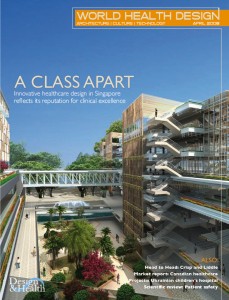
Read the full study on critical care rounding practices here.


Additional Press:

Note This study, “Staff Preference for Multidisciplinary Rounding Practices in the Critical Care Setting,” was presented at the International Academy for Design & Health: Design & Health 7th World Congress & Exhibition in Boston, Massachusetts; July 8, 2011.

Note This study was presented as a poster presentation at the Society of Critical Care Medicine Annual Congress in Miami, Florida; January 9-13, 2010.

SCCM-FINAL-Poster_Jan-6-2010 Conference Presentations, Peer-Reviewed Publications

Patient and Family Preferences for the Design of a Palliative Care Unit

April 1, 2008 / Dochitect / Design for Palliative Care

Peer-Reviewed Publications

Publication: World Health Design
Publication Reference: 2008;1(1):62-67.
Author: Diana Anderson, MArch, MD Candidate, Class of 2008, University of Toronto
View article

2008_PALL-CARE-COVERThe primary purpose of this qualitative study was to identify what palliative care patients and their families perceive to be important elements in the design of a palliative care unit (PCU) for end-of-life care. Secondary objectives included exploring whether differences in preferences and perceptions exist between patients and family members. This study looked at the palliative care population of Bridgepoint Hospital in Toronto, Canada, and evaluated patient and family preferences for room design and layout, as well as preference for private versus shared accommodations.

Click here to view the study which includes patient and family room preferences towards the end of life, in addition to palliative care unit design recommendations.

Additional Press:

Note This study, “Patient and Family Preferences for the Design of a Palliative Care Unit,” was presented at the Design & Health 5th World Congress and Exhibition: International Academy for Design and Health, Glasgow, Scotland. June 30, 2007.

sitephoto2


Conference Presentations, Peer-Reviewed Publications
123

A Book from Dochitect

The Dochitect’s Journal: A collection of writings on the intersection of Medicine and Architecture

Find out more here.

Search

Recent Articles/Publications

  • Bioethics Peer Review: A Structured Evaluation Framework for Long-Term Care Environments

    February 13, 2026
  • Book Review of Sick Architecture, by Beatriz Colomina, Nick Axel, and Guillermo S. Arsuaga. The MIT Press, 2025

    November 21, 2025
  • Society of Critical Care Medicine 2024 Guideline on Adult ICU Design

    February 21, 2025

Recent Presentations

  • Keynote Speaker, Women in Science and Engineering (WISE) 14th Annual Conference, University of Toronto

    January 17, 2026
  • RAIC Panel Discussion- Redefining Long-Term Care: Architecture, Culture, and Person-Centered Approaches

    September 3, 2025
  • Canadian Institute: Healthcare Infrastructure for Aging Populations, Atlantic Canada

    July 16, 2025

Publication Type

  • Blog Post
  • Book
  • Book Chapter
  • Book Review
  • Commentaries
  • Letters to the Editor
  • Peer-Reviewed Design Guidelines
  • Peer-Reviewed Publications

Presentation Type

  • Conference Presentations
  • Keynote Presentations
  • Lectures
  • Panel Discussions
  • Podcasts
  • Webinars

Design Topics

  • Commentaries & Event Reviews
  • Design for Clinical Staff
  • Design for Critical Care
  • Design for Geriatrics
  • Design for Infection Control
  • Design for Palliative Care
  • Design for Patient Safety
  • Design for Resiliency
  • Design for the Future of Health
  • Dochitect in the News
  • Evidence-Based Design
  • General
  • Health Design & Ethics
  • The Physician-Architect Model

Archives

Follow Dochitect

Follow me on:

** ©2026 Dochitect :: Site by KPFdigital :: Admin Login